
TMS Therapy in Littleton, Colorado
Transcranial Magnetic Stimulation uses brief non-invasive magnetic pulses to stimulate specific regions involved in mood regulation. It is administered in our Littleton clinic and does not require anesthesia; most people resume routine activities after a session. Coverage depends on the device, protocol, diagnosis, and plan criteria.
TMS at a Glance
Littleton, CO 80128 · Serving the southwest Denver metro- MDD / Treatment-Resistant Depression (typically covered by insurance when eligible)
- OCD (evidence-based; FDA-cleared on certain devices as an adjunctive treatment)
- Smoking cessation (evidence-based; FDA-cleared on certain devices as an adjunctive treatment)
- Insomnia (off-label and not FDA-cleared, with emerging evidence of benefit)
Understanding the Treatment
What is TMS?
Transcranial Magnetic Stimulation (TMS) uses a coil placed against the scalp to deliver focused magnetic pulses that induce electrical activity in a targeted area of the brain. Its antidepressant effects likely involve changes across connected brain networks, although the complete mechanism is not fully understood.
During a session you sit in a comfortable chair and remain awake. TMS requires no anesthesia or systemic medication, so it avoids systemic drug exposure and many medication-related side effects.
- Awake and alert during the session; read or listen to music
- Most people can drive themselves to and from their TMS appointment if they feel well enough
- Does not typically cause the acute memory effects associated with ECT
- Can be used alongside medication and therapy when clinically appropriate
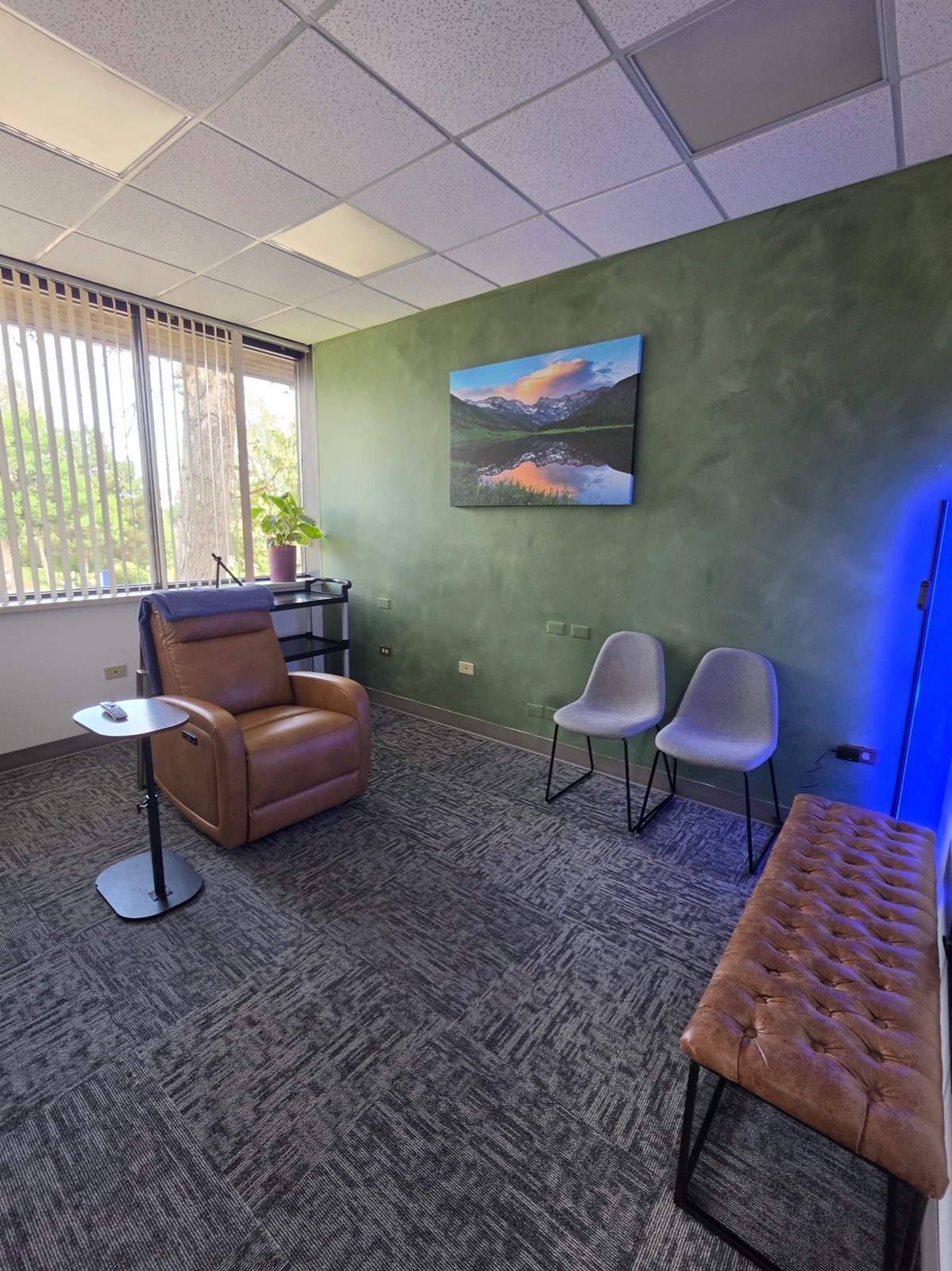
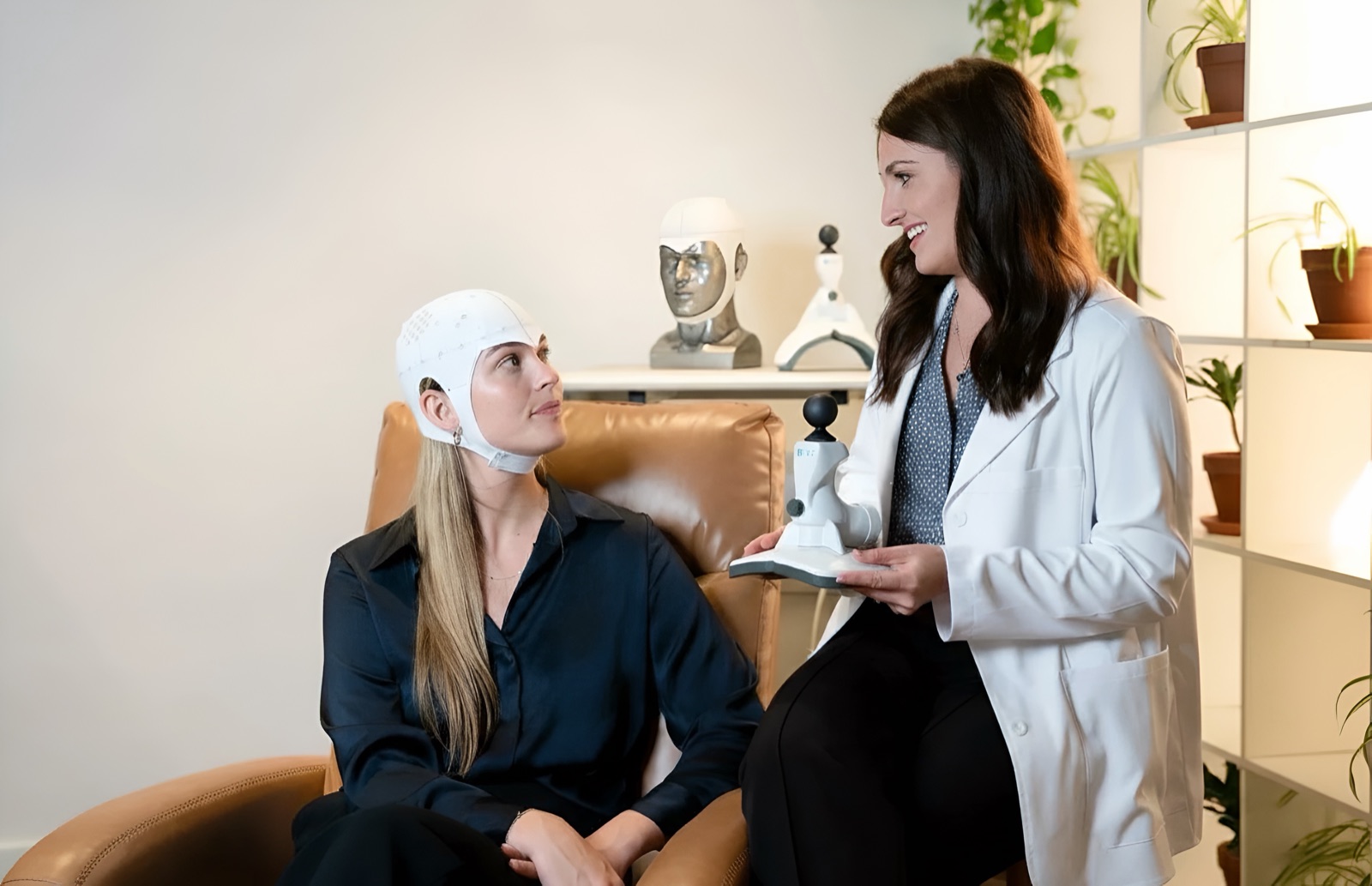
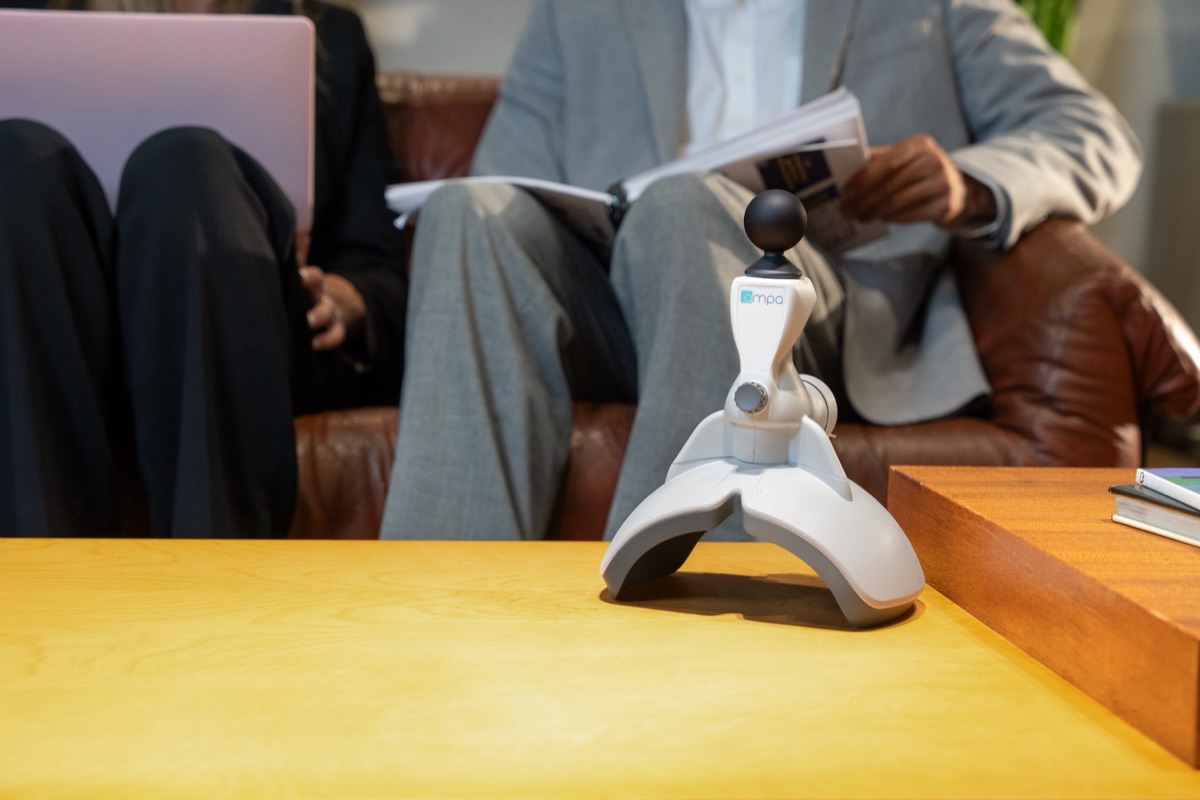
Photos courtesy of Ampa.
Our TMS System
About the Ampa One
Ampa One is an FDA-cleared transcranial magnetic stimulation (TMS) system featuring a camera-enabled coil designed to support coil positioning and repeatable session setup.
TMS is a well-studied, non-pharmacologic treatment that uses brief magnetic pulses to stimulate brain cells. Unlike medications, TMS is delivered in a finite series of clinic sessions rather than taken daily.
TMS uses magnetic stimulation to stimulate specific brain circuits involved in regulating thoughts, behaviors, and emotions. Published clinical studies and real-world data have reported that the majority of people with depression respond to TMS. Individual results may vary.
TMS is generally well tolerated. Side effects are typically mild and temporary. Not all patients are candidates for TMS; eligibility is determined by your clinician.
Ampa One is FDA-cleared for the treatment of treatment-resistant depression.
Is TMS Right for You?
Who qualifies for TMS
TMS may be a strong fit if several of these describe you:
- You’ve been diagnosed with Major Depressive Disorder (MDD) and have failed two or more antidepressant medications after at least 6–8 weeks of trying each medication
- You were unable to tolerate medication side effects and are wondering about non-medication alternatives
- You’re living with OCD symptoms that persist despite therapy and medication
- You can attend brief in-person treatments during weekdays at our Littleton office consistently for at least 6 weeks
When TMS isn’t the right fit
Some conditions make TMS unsafe. Tell us during your consultation if any of these apply to you:
- Metal or implanted devices, or metallic fragments, within 40 cm of where the treatment coil will be placed
- A cardiac pacemaker, implantable cardioverter-defibrillator, or other active implanted device
- A seizure disorder or a history of seizures
- A recent history of intracranial bleeding, aneurysm, stroke, traumatic brain injury, or neurosurgery
- A severe, active substance use disorder where there is a risk of receiving treatment while intoxicated
These and other factors are reviewed individually before treatment begins. See the Ampa One safety and contraindication guidance for additional context. If TMS isn’t safe or suitable for you, we’ll explain why and discuss alternatives such as Spravato®, IV ketamine therapy, or a revised medication plan.
The Process
How TMS works at Fortifying Wellness
-
1
Consultation & medical evaluation
Dr. Wagner takes the time to understand your full story: your symptoms, history, medical health, every treatment you’ve tried and how it went, and your goals. You leave with a clear working diagnosis and a plan you helped shape, and nothing starts without safety screening and informed consent. If TMS is safe and appropriate for you, we verify your insurance benefits and handle prior authorization.
-
2
Brain mapping & personalization
Your first appointment locates the treatment target and determines your motor threshold, which helps set the stimulation intensity for your course.
-
3
Brief daily sessions
Session length and schedule depend on the prescribed device and protocol; many standard courses involve weekday visits over several weeks. We confirm the proposed schedule before treatment begins.
-
4
Measurement and follow-up
We track your symptoms with validated scales throughout. Follow-up, tapering, or additional treatment is individualized according to your response and the prescribed protocol.
The Research
The published research behind TMS
TMS for depression has been tested in randomized sham-controlled trials and tracked in routine practice for nearly two decades. These five studies include four that helped shape the field and a recent meta-analysis, each linked in full at PubMed:
Protocol and Precision Meta-Analysis
Across 30 randomized comparisons, prefrontal rTMS showed robust antidepressant benefit. Increasing dose or intensity did not produce a proportional linear benefit, supporting further study of precision-oriented approaches.
Multisite U.S. Trial
The pivotal trial of TMS for depression: active TMS outperformed a sham treatment in patients whose medications had not helped, the evidence base for the first FDA clearance.
National Institute of Mental Health
In an NIH-funded trial at four university hospitals, daily prefrontal TMS produced remission of depression significantly more often than a carefully matched sham.
42 U.S. Practice Sites
Outside the lab, in routine clinical practice, TMS brought measurable improvement for patients whose antidepressants had not been enough.
Three Canadian University Hospitals
A newer three-minute form of TMS, theta burst, relieved treatment-resistant depression as well as the standard 37.5-minute session.
Regulatory status, stated plainly
TMS devices use the FDA clearance pathway for medical devices, which is different from drug approval. Clearance is specific to each device, protocol, indication, and age range. We’ll explain exactly what our device and proposed protocol cover during your consultation.
These are simplified summaries of independent studies; follow the links for full methods and limitations. Study results describe research populations, not a promise of individual outcomes. We track your response with validated symptom scales.
Safety & Side Effects
What TMS feels like
Most people describe TMS as a rhythmic tapping on the scalp. Common side effects include scalp discomfort and headache, which often lessen during a treatment course. TMS avoids systemic drug exposure; weight gain, sexual dysfunction, and sedation are not typical direct side effects.
Seizure is a rare but important risk. Individual risk depends on medical history, medications, sleep, substance use, stimulation parameters, and other factors, which is why every course begins with careful screening and treatment is medically supervised.
Cost & Coverage
Insurance & cost
Most major insurance plans cover TMS for treatment-resistant depression once step-therapy criteria are met. Our team confirms your specific requirements, submits the prior authorization, and provides a written estimate before your first session. Self-pay options are available if you’re out of network, seeking accelerated scheduling options, or looking for off-label indications.
TMS Questions
Frequently asked questions
Does TMS hurt?
Most people describe it as a tapping sensation. Some notice mild scalp discomfort or a headache early in treatment; this often lessens with time. There’s no anesthesia or sedation, so most people can drive themselves if they feel well enough after treatment.
How is TMS different from ECT?
TMS uses focused magnetic pulses to induce electrical activity in a targeted area of the brain. Unlike electroconvulsive therapy, it requires no anesthesia and does not intentionally induce a seizure. Most people resume routine activities after treatment if they feel well enough.
Will my insurance cover TMS in Colorado?
Many commercial plans cover TMS for treatment-resistant depression when their criteria are met, commonly including a depression diagnosis and documented medication trials. We verify your benefits, manage the prior authorization, and give you a written estimate before you begin.
How soon will I notice results from TMS?
Response timing varies by person and by protocol, and improvement is not guaranteed. We measure your symptoms with validated scales throughout the course, so you and Dr. Wagner can see whether it is helping rather than guess.
Can I keep taking my medication during TMS?
Yes. TMS is commonly combined with antidepressants and psychotherapy. Dr. Wagner reviews your full regimen during your evaluation and coordinates with your existing prescriber or therapist when helpful.
Conditions TMS can help
Take the Next Step
Find out if TMS is right for you
A free consultation with our Littleton team. Your questions answered, your benefits verified, no obligation.
7345 S. Pierce St, Suite 205, Littleton, CO 80128 · Serving Littleton, Ken Caryl, Columbine, Highlands Ranch, Centennial, Lone Tree, Englewood, Lakewood & the south Denver metro